
Top Distance MBA Programs in India
Thinking about pursuing an MBA but can’t attend regular classes? A Distance MBA in 2025 might just be the perfect … Read more
Thinking about pursuing an MBA but can’t attend regular classes? A Distance MBA in 2025 might just be the perfect … Read more

In the rapidly changing world of work, flexibility and relevance matter more than ever. That’s why Online MBA programmes are … Read more

Thinking about doing an online MBA in India but not sure where to start? You’re not alone! With the rise … Read more

If you’re a mid-career professional looking to break into leadership roles or shift into a new domain, an Executive MBA … Read more
Dreaming of an MBA but worried about the cost? Good news: You don’t have to spend a fortune to earn … Read more
In the digital era, marketing has shifted from billboards to browsers — and every business now depends on digital strategies … Read more

In 2025, Digital Marketing has become one of the most in-demand career paths in India. From social media and SEO … Read more

In today’s fast-paced digital era, the Online MBA has become one of the most popular postgraduate management degrees for students … Read more
Bonded labour is where an employer gives high-interest loans to an individual in exchange for long-term service and labour. People are often forced to take these loans to pay for big events or to simply cover the costs of their daily needs.
Agreeing to bonded labour is not always an easy decision to make, but many are forced to pledge not only themselves but their entire families too. This creates an unbreakable cycle of poverty. There are currently several children who are at the mercy of their employees and they are left to suffer economic hardships and educational deprivation
The sad situation is that this debt is nearly impossible to pay off. This is due to the high interest rates, low wages, and the employer’s unwilling attitude to let them go. In fact, many employers have been known to tamper with loan records in order to prolong the employees working duties.
It’s not uncommon for child agricultural workers frequently work long hours in scorching heat while they haul heavy loads of produce and are exposed to toxic pesticides. These employees also suffer high rates of injury from sharp knives and other dangerous tools. Their work is gruelling and harsh and violates one’s rights to health, education, and protection from work that is hazardous and exploitative.
Work protocol is often structured so that “expenses” and/or “interest” are deducted from a child’s earnings in amounts that make it almost impossible for them to repay debt. In some cases, the debt goes back generations in that a child’s grandfather (or even great-grandfather) was promised to an employer with the understanding that each generation would provide the employer with a new labourer – often with no pay at all.
At the mere age of six, Javed started working as a brick kiln worker in a village in Pakistan’s province of Punjab. This child was given one small meal per day, he had little free time, and no medical care was provided. He was in this situation because he had to work off the debt of a family member whom he didn’t even know. He was not even made aware of the total loan amount. Each time he made a mistake at one of his tasks, he was fined and the debt was raised. There was a scenario where his employer beat him because he said his performance was too slow. Javed tried to escape at one stage, only to be apprehended by the local police who took him back to his employer who continued to imprison him with work.”
Javed is now free because The Edge Foundation has paid his debts, and he has learned new skills to support his family. His three children are going to Edge Foundation Primary School.
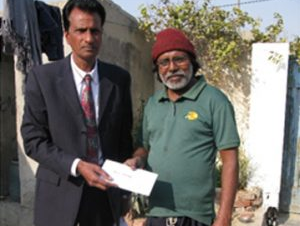
This is just one of many devastating situations where individuals are essentially forced into slave labour with no means to escape.
Bonded labour takes place in many industries. From brick kilns, carpet industries, agriculture industries, fisheries, stone/brick crushing plants, shoe-making factories, power looms, to refuse plants – there are many businesses who take advantage of the poverty-stricken communities. However, the brick kiln industry is the most widespread in Pakistan, with more than half a million men, women and children working in this industry.
The Edge Foundation wants to help break this cycle and put a child where they should be; in school. Our current project aims to do just that. We arrange for children who are forced to work in bonded labour to have a chance to go to school and gain an education that will give them more opportunities in life. By paying for their school fees, uniform, and stationery, we can give them the aid that they need to make schooling a realistic possibility. To add, we also supplement the parents with an income in replacement for their child not working in the brick kilns and other industries where they are forced to work and pay off debts.